
Colson Whitehead
"It's harder to find a good coffee table than it is to fall in love."
Just finished CW’s “Cool Machine.” I’ve also read his “The Nickel Boys” and “Zone One.” I want to strongly recommend all of them. He is a fantastic writer and an ingenious story-teller. On a recent trip to Maine, which is becomind an annual pilgrimage, we visited a tiny bookstore in Castine. I saw the book and grabbed it, along with two others. I rarely buy brand-new books. Usually I fish for free PDFs onine to read on my Kindle.
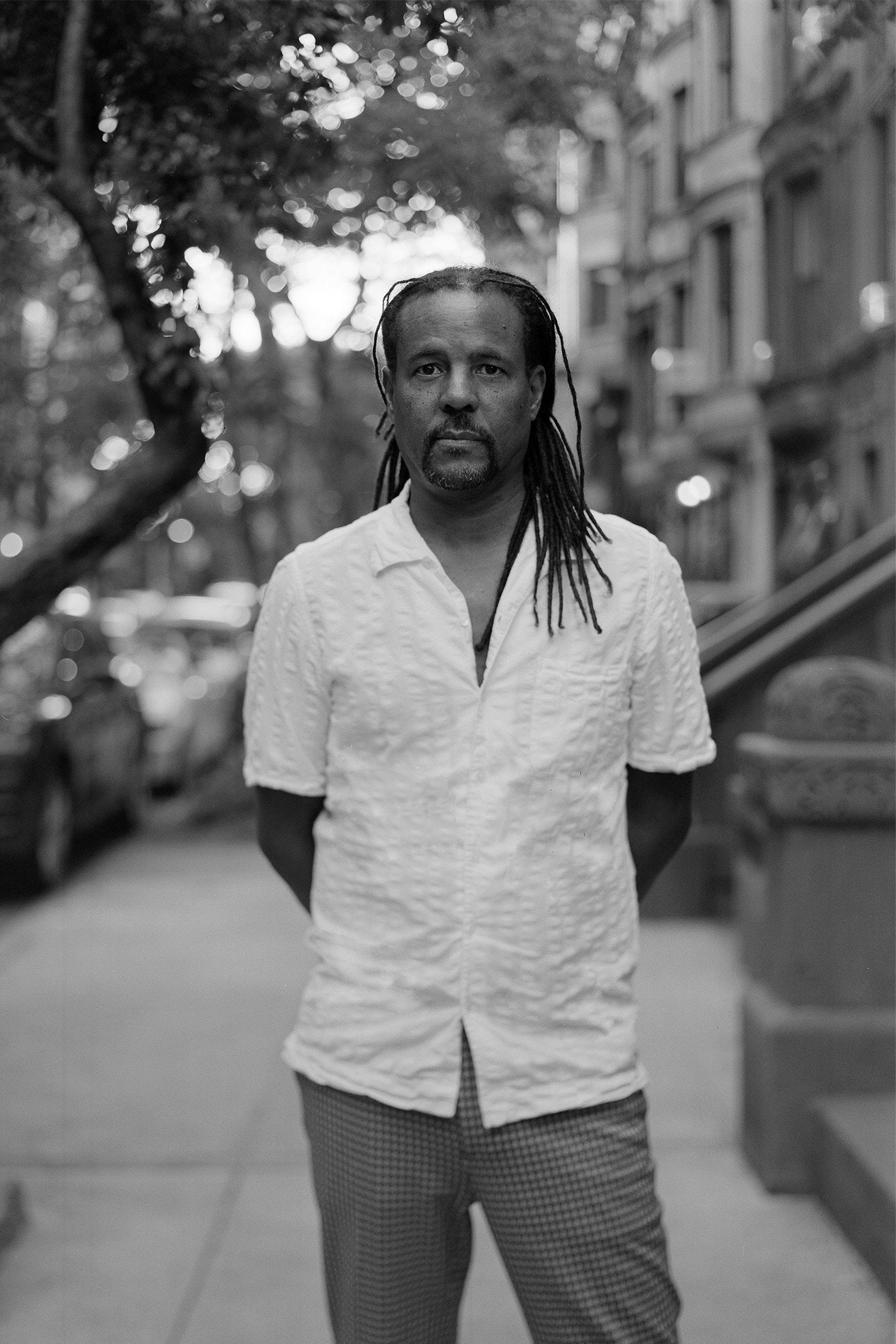
“Cool Machine” is part three of CW’s Harlem trilogy. I haven’t read the other two, but as a denizen of Manhattan between 1975 and 1985, “Cool Machine” triggers many memories of New York City. The main character is really the city itself. At the end of the trilogy, it evolves into something new, along with the protagonists.
I distinguished above between the writing and the story-telling. I thought to memorialize one of CW’s briliant sentences for this note, but I gave up. Which one? There are too many, on every page.
I lived in Manhattan, between 1975 and 1980, progressively extricating myself from some demented post-college radicalism. It’s still my favorite place in the world, another of our frequent destinations, usually the Lower East Side. I followed local politics religiously and used to prowl the East Village. Read the Village Voice devotedly, with Stan Mack’s “Real Life Funnies, “The Angriest Dog In the World,” and the pre-Simpson’s Matt Groening’s “Life In Hell.” Listened to WBAI’s Steve Post and Larry Josephson (R.I.P. to both). Lots of bits jived with my own memories. Ed Koch, Rudy Giuliani, etc. I heard Herman Badillo speak once; he was brilliant. He tried to be mayor; what a missed opportunity for the city.
A similar, appealing restrospective of Manhattan in that period that I happened to catch recently is the TV documentary “Bang My Box,” about the early wild west of local public access cable and its support for gay liberation. The proliferation of cable TV throughout the city happens to play a role in CW’s story, though its content is never an issue.
The other thing that sticks out for me in CW’s book is that the African-American protagonists are solvent, middle class, and successful entrepreneurs. The drama comes from their connections, some inherited, to the criminal world, which for CW is really NYC itself. But they are not of the criminal world.
Per Ishmael Reed’s attacks on “The Wire” TV series, there is no ghetto porn in CW’s stories. In one way it reminds me of the striking ending in the film version of “Devil In the Blue Dress,” a vision of a bright, viable, solvent African-American urban neighborhood, which ran counter to my intuition. (I’m also a fan of Walter Mosely’s books.)
NYC in CW’s novel is anything but bright. It’s a pit of corruption; everybody is on the take. But in it, CW’s characters carve out an island of dignity and honor, like Easy Rawlins in the Mosely novels.
I like the sentence "I lived in Manhattan, between 1975 and 1980, progressively extricating myself from some demented post-college radicalism." In my case it was 1978 to 1982, but it was the same extrication.