
Another season is over. Without its dragons, it is a very ordinary, albeit gory, ‘sword-and-sandal’ production, which is why the newest one, the dragonless “A Knight of the Seven Kingdoms,” is a big snooze. The first series, Game of Thrones, was better than both, thanks to its bevy of magical creatures and monsters. To make things worse, House of the Dragon ended with too many cliff-hangers.
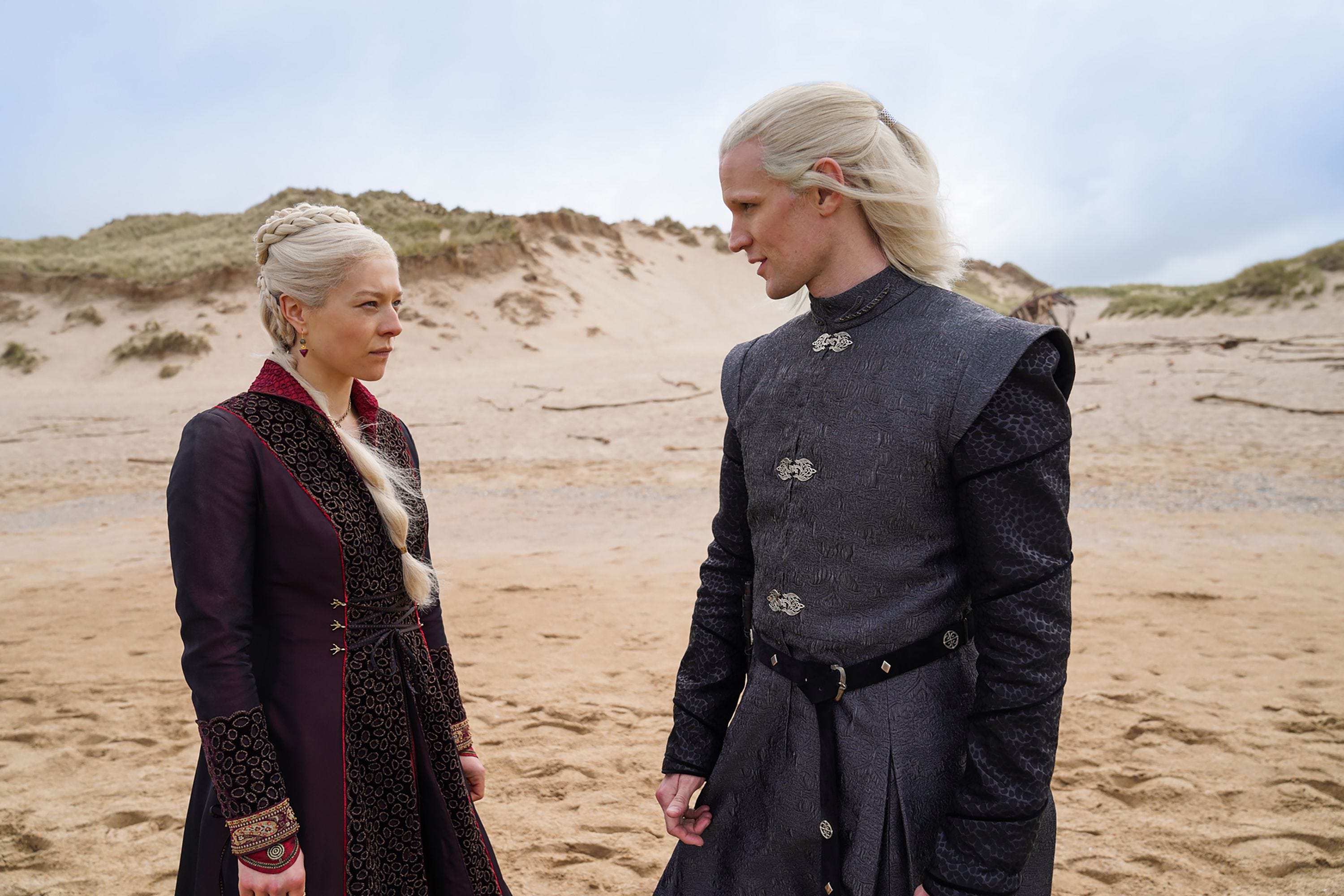
The protagonist is one Rhaenyra Targaryen, aspiring queen, whom I find to be an annoying, whiny bitch, like most of the women in the show. Her BF Prince Daemon (right, above) is more interesting. I much prefer Daenerys Targaryen from the original Game of Thrones. Daenerys was played a little over the top, but not too much, even though she eventually incinerated half of her subjects. My other fave from the original was Cercei Lannister, similarly ruthless and homicidal. Give me women willing to kill thousands without mercy or regret.
I’ve always been struck by the ersatz names in these series, which remind me of streets in suburban developments. I’ve spent time poring over online maps of the GoT world, which are more interesting than any of the TV shows, once you get past Westeros and Essos, to the mysterious lands to the south and east.
On top of everything else, these series are little more than just yarns. I see no overriding themes of any consequence. A yarn can be well-told and interesting, others are not, but they are all similarly vapid, like soap operas.
Speaking of sword-and-sandal, there is a PBS production of “The Count of Monte Cristo” that I’ve begun, in about eight parts. The first episode is a little slow, but the second picks up with the entrance of Jeremy Irons as Abbé Faria. The politics — when Napoleon was the progressive ideal — are interesting. The plot becomes more interesting as we see the protagonist’s schemes for revenge taking shape.
Coincidentally I’ve been reading — fighting my way through would not be inaccurate — “The Four Heavens” by David Stuart. He’s one of the leading experts on the ancient Maya.
The Maya was a great civilization that flourished very roughly between a thousand years before the Common Era (birth of Christ) and the 800 after. Contrary to popular supposition, it had mostly collapsed well before the arrival of the rapacious Spanish conquistadors, perhaps for environmental reasons (the exhaustion of accessible fresh water).
Information on the ancient Maya has been very hard to come by. The historical record consists of hieroglyhic carvings found throughout Central America on stone blocks and pyramids — chiefly Belize, Honduras, El Salvador, Guatamala, and Southern Mexico. Deciphering these was a central task of archeology. The calenders were unbuttoned first. I look at the many reproductions of the symbols in the book and I can’t make head or tail out of them, even with Stuart’s description of what I am supposed to be looking at.
Many carvings have been destroyed, looted, or damaged. Basically the historical record is a vast field of rubble, a giant jigsaw puzzle. Despite that, it has become possible to read the inscriptions and construct a history. The hieroglyphics have been decoded, including by Stuart himself. It has not helped that the Spanish colonists made it their business to destroy what records existed, with religious justification for eradicating heathenism.
I don’t think I could get into archeology. There is too much guesswork and mystery involved. Stuart himself acknowledges not a few of the findings are “in the eye of the beholder.”
The relevance to the Game of Thrones universe is that the Maya was an aggregation of constantly shifting, rival, fragmented sub-empires perenially at war amongst themselves. Stuart at one point references the series. His book is hard to follow due to the proliferation of rival groups with unpronounceable names. I’m about halfway through and doubting I will finish it.
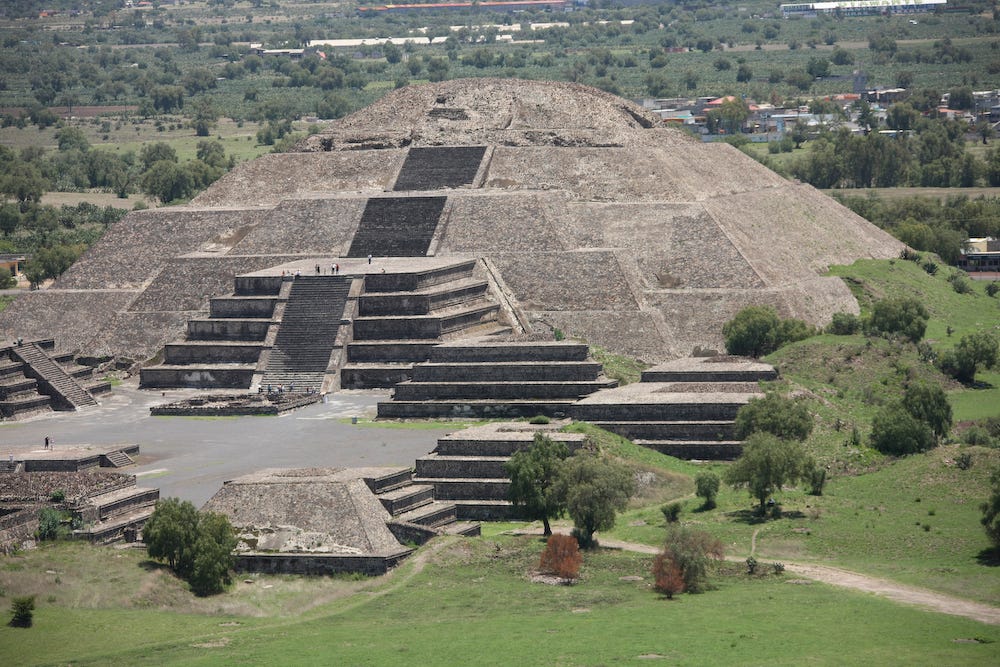
One popular point of reference is the Mel Gibson movie, “Apocalypto.” The movie provoked criticism that it inaccurately depicted Maya as bloodthirsty, prolific practitioners of human sacrifice. By Stuart, this criticism was prone to exaggeration. Though the Mexican civilization to the north, in the great city of Tio’tihuacan (next to modern-day Mexico City) were the most avid executioners, Stuart has said the Maya were also implicated, more than a little.
There is more accurate content in the Gibson film than somertimes appreciated. He may be a racist uber-reactionary fascist asshole, but he made a good movie and worked to infuse it with realism. Clearly artistic liberties were taken as well, but it’s still a hell of a film.
I have to mention one scene from the film which only lasts for a second but obsesses me. The hands of a Mayan ruler behind a curtain are shown holding a magnifying glass over a map. The hands are white. If you Google this, the AI tells you there is no such scene, but that is flat wrong. I’m dying to know what Gibson was thinking.
Human sacrifice is still a possible ideological outcome
Now we don't do it honestly
Now they have to be badddd