
Inflation Bunk
I wish people would stop trying to make partisan hay about the rise in inflation.
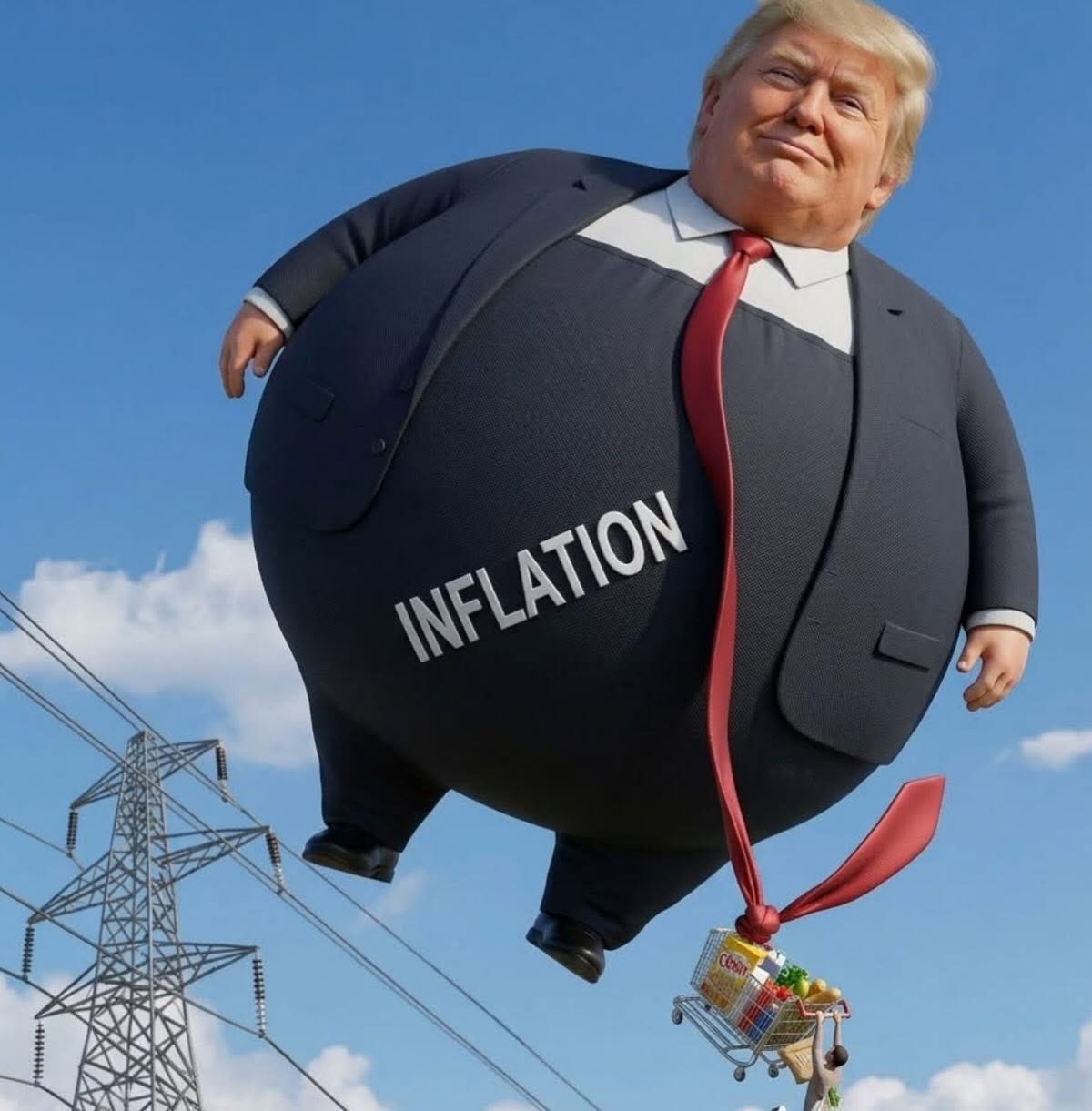
First of all, four or even five percent isn’t so much. With a Democratic administration, there would be — or should be — few complaints from our side. That’s a tip-off to the inanity of the inflation babble. It’s also a set-up to get bitten in the ass if power shifted to the Democrats and inflation persisted. You can use conservative propaganda against Republicans, but that makes it easier for them to use it against you later.
Second of all, inflation or “affordability” glosses over the underlying, overriding issues: labor compensation and public benefits. If incomes are adequate, prices become intrinsically less important. Incomes goes to the state of political power — the power of employers to cram down wages and salaries, and the power of the Right to constrain public benefits. Related, I’ve been promoting Arin Dube’s substack on the benign effects of a higher minimum wage. Here is a Twitter version. My former employer The Economic Policy Institute has been on this forever.
Third, “inflation” obscures what I would classify as the three most important components of the elevated price level (not the periodic increase, which is the definition of inflation), important because of their magnitude and because of the availability of remedies in public policy. These three are health care, housing, and higher education.
We hear the most about gas prices, which first of all is determined by a global cartel and is not much susceptibile to government action. I realize I live a sheltered life, but I suspect most people can bite the bullet and pay $4 a gallon for gasoline. Yes I know there are exceptions. You can’t make a sound case on exceptions. Meanwhile, the biggest political targets get off scot-free.
First off, on health care, there is the shortfall in public insurance, including ‘ObamaCare’ subsidies and Medicaid cuts (the latter can be addressed by state government), as well as the inflated cost of prescription drugs due to monopolies in patents, as my friend Dean Baker tirelessly reminds us, and vertical integration in the private health insurance industry.
Second, housing. For policy this is a touch nut to crack but few things are more important for most families. We’ve had a shortfall in construction after the Great Financial Crisis of 2008, including the lame response from Democrats and the Obama Administration. There are fixes.
Third, higher education. The simplest to fix, starting with the recovery of state government aid to public colleges and universities. Relief from this source should put downward pressure on the costs of all post-secondary education. Don’t assume it has only happened in blue states.
When we talk in general terms about “inflation,” we either over-emphasize gas prices or we gloss over the more relevant, substantive policy issues.
I imagine that it's not so much that you like being taxed. Rather it's that you are (more than) willing to pay to live in a society that both has a low level of economic inequality and delivers many high quality public goods. Taxes, properly designed, enable both. If it's just that you like being taxed, the standard libertarian response is "Well then, send more money to the government (and leave me out of it)".
I agree with the economics. Steady inflation is not much of an economic problem. You can genuinely reduce consumer costs with better policy. But better policy would entail higher taxes for health care and education. Everything nets out fine economically--real consumer income would increase despite higher taxes--but the politics is a problem. Voters don't like taxes. They would rather pay more of their income if you don't call the extra cost a "tax." The most powerful voters--the funders--*really* don't like taxes.
Me, I'm a weirdo. I like being taxed. I think my taxes are too low. But that is a minority taste.